
How I use Design Frameworks to Connect Data and Business Insight
A framework I always use to bridge the gap between data and business goals to design data products that drive actionable decisions.

One day, a business leader and I were discussing a challenge her team faced with dashboard adoption. Frustrated, she confided, “I just don’t see how this data is supposed to help us make decisions—there’s so much of it, but it doesn’t tell me what I need to know.”
Later, in a separate session with a data leader on the same project, he admitted, “The business says the insights aren’t clear, but we’re delivering everything they asked for.”
This disconnect between data and business impact is surprisingly common—and costly. Data teams invest immense effort and resources in gathering, processing, and visualising information. Yet, business leaders often feel these dashboards aren’t delivering the actionable insights they need. Bridging this gap requires more than data; it demands a structured design approach that transforms data into clear, decision-driven dashboards.
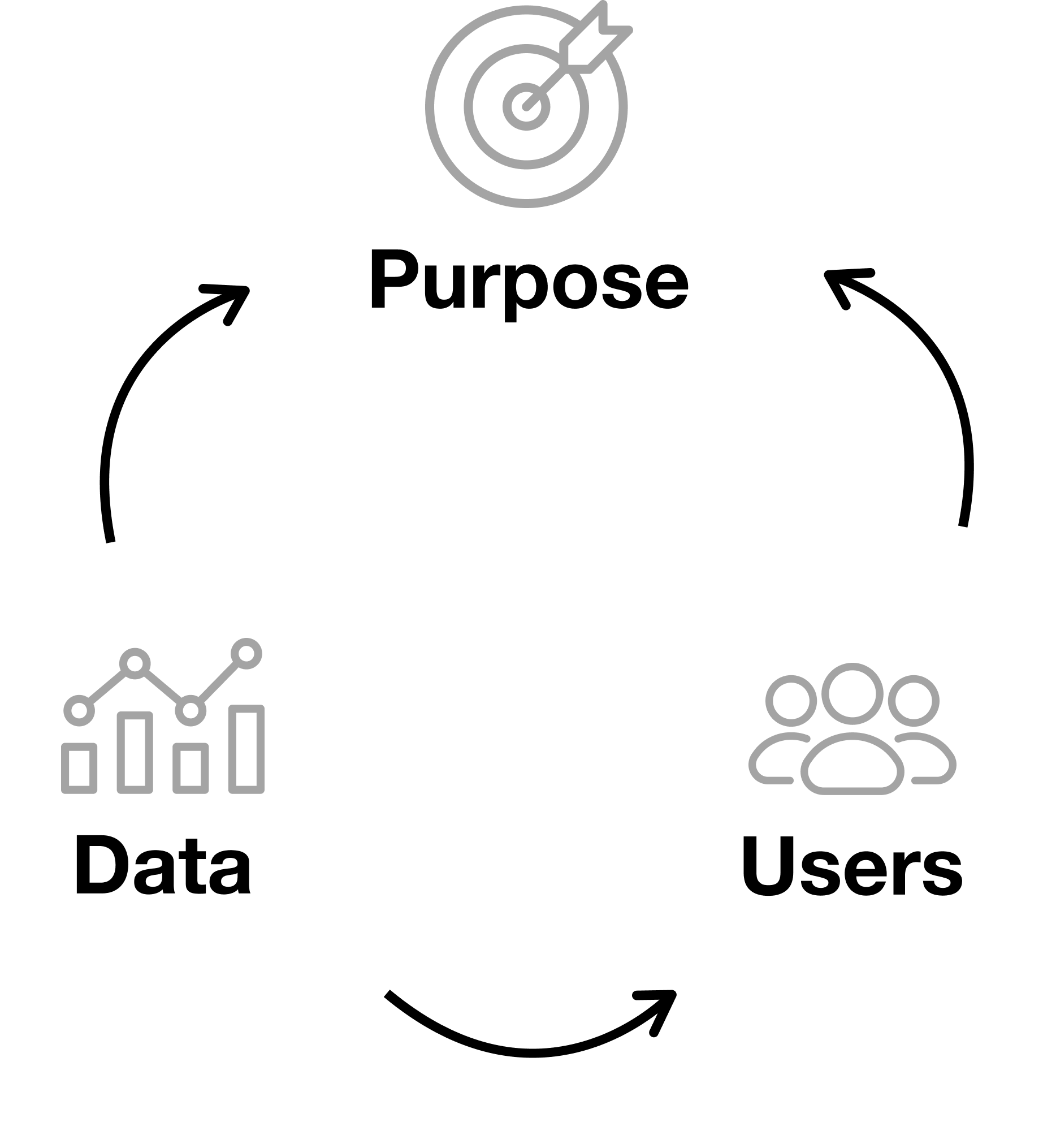
When I design data products, mainly dashboards with business and data teams, I use a framework that I first learned as a Junior Designer working at a Data Visualisation agency. This method guides our focus through the three core elements of any successful project: purpose, users, and data.
Step 1: Start with the Purpose of Your Analytics Project
First, align with business leaders on the project’s purpose. Rather than just meeting data requests, this step ensures we’re clear on what decisions need to be supported and which metrics matter most. Without this understanding, even data-rich dashboards can miss the mark. I like to ask questions like, “What value should this project bring?” and “What impact do we want to create?” These answers set a clear, decision-oriented path for the project.
Step 2: Identify the Users and Their Needs
Next, we focus on the users of this product. By working with business leaders, we pinpoint who will be using the product and why. This allows us to conduct user research tailored to their needs. What are their goals? What pain points do they experience? What insights would be most useful? This clarity ensures that we’re not just designing for “everyone” but for the specific individuals who need these insights to act.
Step 3: Dive into the Data and Formulate a Narrative
At this stage, I bring together both business leaders and the data team for a workshop to examine the data. We review available metrics, define terms, and address any data concerns. This collective understanding helps us move beyond isolated figures and toward a cohesive story—one that business leaders can trust and data teams can refine.
Step 4: Craft the Data Story Together
Now it’s time to start shaping the story. Together, we ask, “What do we want users to see in this data? Are there positive or negative trends to highlight? Is there a benchmark for comparison?” We think through how the data connects to the users’ goals and, importantly, what actions we hope they’ll take based on the insights presented.
Step 5: Prototype, Test, Iterate and Refine
Only with a shared understanding of purpose, audience, and data do we begin prototyping. As we design, we involve the team and users, testing early solutions and making sure our approach solves the problem in their eyes. Testing and refining allow us to hone the product into a practical, actionable tool that meets the needs of everyone involved.
The result? A data and analytics product that genuinely bridges the gap between data and business.
Business leaders gain a tool that helps them uncover connections, identify opportunities, and make confident decisions. Data teams see their work adopted and appreciated, knowing it drives meaningful impact.
The Power of Design to Connect Data with Action
An intentional design process transforms data products such as dashboards from static displays of information into powerful, decision-driving tools. This design-centered approach is the missing link that turns raw data into actionable insight, creating a data product that truly delivers value and empowers informed decisions.
If your team is struggling to make data-driven decisions, ask yourself: is your data product designed to provide true business insight? A focused design approach could be the key to unlocking the full potential of your data.